
30th Anniversary Seminar of SNCF-RTRI Collaborative Research Held
December 03, 2025
Railway Technical Research Institute
The Railway Technical Research Institute (RTRI) held the “30th Anniversary Seminar of SNCF-RTRI Collaborative Research” in Tokyo on November 28.
RTRI concluded an agreement concerning collaborative research with Société nationale des chemins de fer français (SNCF) in 1995. Since then, the two organizations have conducted collaborative research and information exchanges in various technical fields, as well as exchanges of personnel. As a milestone marking 30 years of this partnership, a seminar was held as described below, to look back on the accumulated achievements of exchange and cooperation, and to reaffirm both organizations’ shared commitment to further deepening their collaborative research and personnel exchanges going forward, and continue to contribute to mutual development.
Outline of the Seminar
1. Date and time: November 28, 14:30 - 17:00
2. Venue: TAKANAWA GATEWAY Convention Center
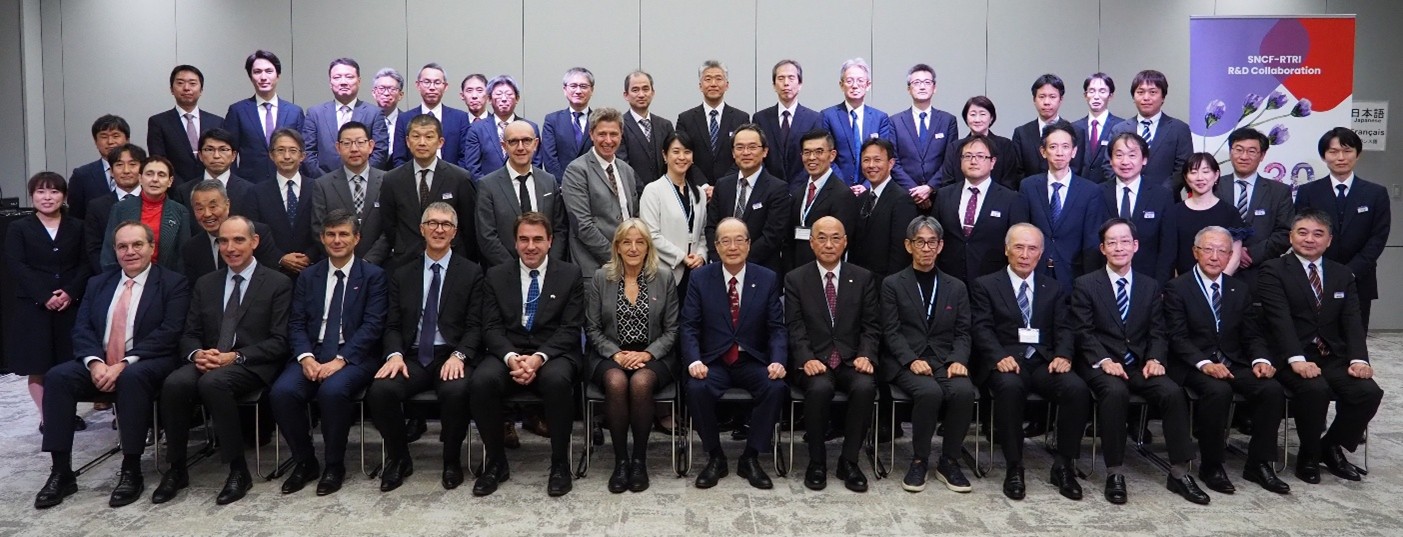
3. Number of participants: Approximately 50
Guests of honor:
Mr. Jun Yokoyama, Auditor and Chairperson of the Railway Transportation Committee,
La Société Franco-Japonaise des Techniques Industrielles (SFJTI)
Mr. Jean-Baptiste Bordes, Science and Technology Attaché, Embassy of France in Japan
(attended on behalf of the Science and Technology Advisor)
SNCF:
Mrs. Carole Desnost, Chief Technical Officer (CTO), and six other representatives
RTRI:
Dr. Masao Mukaidono, Chairman, and approximately 40 other representatives
4. Contents
The seminar opened with greetings by Dr. Masao Mukaidono and by Mrs. Carole Desnost, followed by three commemorative lectures as listed below:
• “30 Years and a View to the Future” – Dr. Norimichi Kumagai, Fellow (former President), RTRI
While looking back at 30 years of collaborative research between RTRI and SNCF, Dr. Kumagai introduced four core principles—“Wa, Kei, Sei, Jaku” (harmony, respect, tranquility, and serenity), the spiritual foundation of the Japanese tea ceremony—and explained that these principles share the same spirit of inquiry and willingness to take on challenges required in collaborative research. He expressed his hope that, while cherishing these principles, the partnership between the two organizations will become even more fruitful over the next 30 years.
• “Railway of the Future in Europe” – Mrs. Carole Desnost, CTO, SNCF
Mrs. Desnost outlined Europe’s greenhouse gas reduction targets and plans to increase the use of high-speed rail and rail freight transport to help achieve them. She also described challenges such as different operating rules and systems in each country and the high costs involved, and explained that digitalization, standardization, and automation, combined with public–private partnerships in R&D, can help address these issues.
• “Building a Sustainable Future” – Dr. Kimitoshi Ashiya, Executive Vice President, RTRI
Dr. Ashiya outlined the changing environment surrounding Japanese railways and RTRI’s R&D initiatives for the future. He reaffirmed RTRI’s determination to further strengthen its collaboration with SNCF, enhance collaborative research between the two organizations, and work together to lead the world through technological innovation and open up the future of railways.
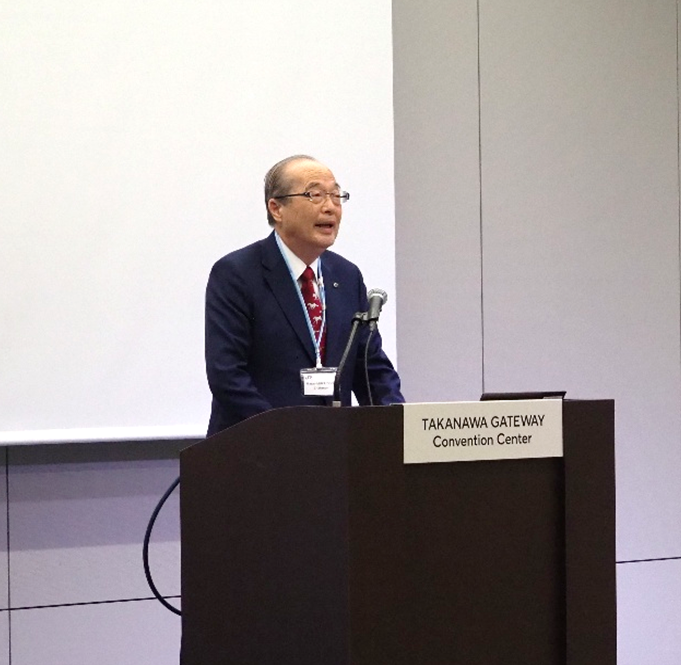
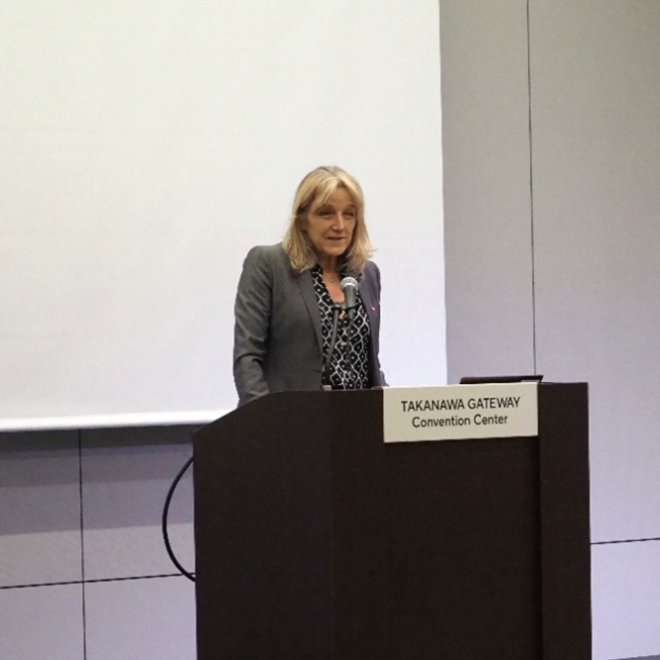
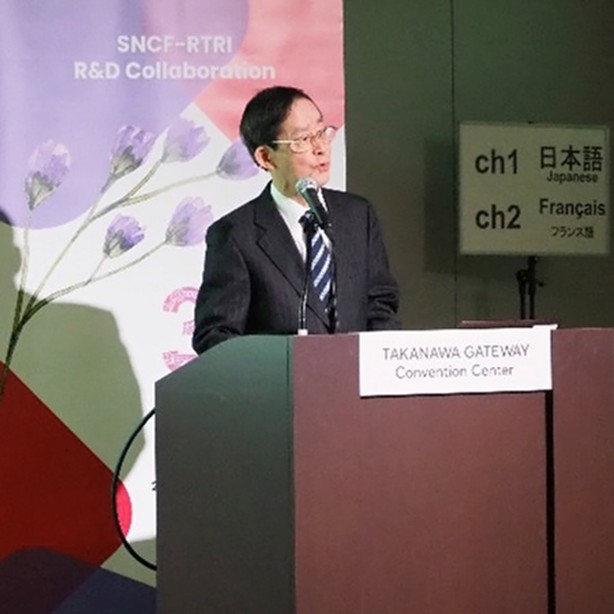
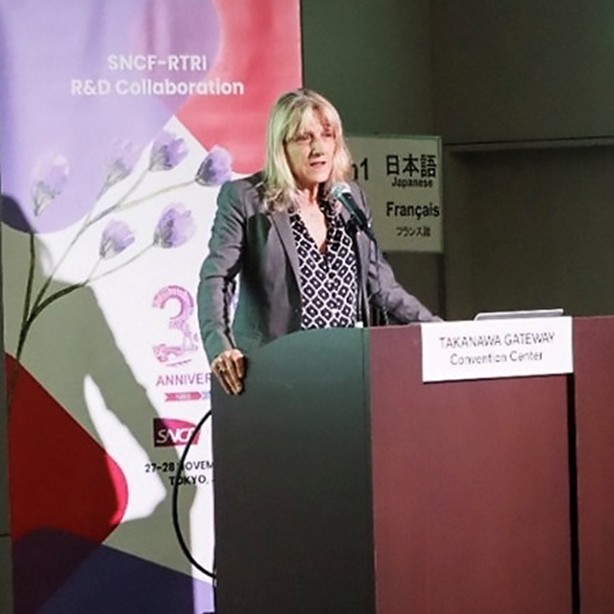
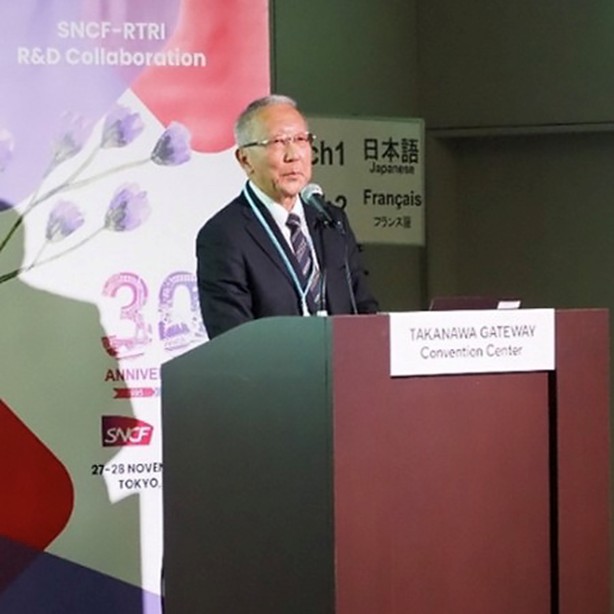
(from left) Dr. Norimichi Kumagai, Mrs. Carole Desnost, and Dr. Kimitoshi Ashiya
Additional Information
Background and achievements of SNCF–RTRI Collaboration
1. History of the collaboration
In 1994, SNCF proposed collaborative research with RTRI in the field of human science. The two organizations signed an agreement on collaborative research in November 1995.
2. Achievements of SNCF–RTRI collaborative research
The collaboration began with four initial projects, and over the past 30 years, a total of 87 projects has been conducted. R&D topics cover a wide range of railway technologies, including maintenance and environmental fields. Collaborative research seminars have been held alternately in Japan and France, totaling 12 times by 2024.
3. Personnel exchanges
Two staff members have been temporarily assigned from SNCF to RTRI and two from RTRI to SNCF. Knowledge and research outcomes obtained on site, including the utilization of a pantograph simulator, have been steadily reflected in subsequent R&D activities of both organizations.
4. Major outcomes to date
SNCF–RTRI collaborative research has implemented projects in a broad spectrum of fields, including maintenance, the environmental engineering, and service-related fields, with continuous efforts particularly in current collection systems and aerodynamics. In recent years, the two organizations have also actively collaborated on disaster prevention technologies, such as measures against heavy rainfall associated with global warming.
(1) Projects on pantograph and current collection
In the power supply and current collection field, continuous collaborative research has been conducted since 2003. The work initially focused on information exchange regarding the dynamic interaction between overhead contact lines (OCLs) and pantographs, through which RTRI obtained knowledge on highly efficient pantograph simulation techniques that had not yet been developed in Japan, contributing to the subsequent development of simulators in Japan. The scope of collaboration has since expanded to include the maintenance of power supply systems and decarbonization.
(2) Projects on aerodynamics
Both SNCF and RTRI share the view that suppressing aerodynamic noise generated around the bogie area is crucial for reducing exterior noise from railway vehicles running at high speed. Collaborative research has focused on aerodynamic noise from bogies, combining fluid dynamics analysis using numerical simulation with wind-tunnel tests in a large-scale low-noise wind tunnel, which has led to clarification of the mechanisms of aerodynamic noise generation and the development of noise reduction measures.
(3) Projects on disaster prevention
In the field of disaster prevention, SNCF and RTRI have worked together to enhance maintenance and management methods for railway bridges subject to scouring damage. The two organizations have exchanged existing technical information on methods for identifying locations susceptible to scouring in both countries and, more recently, have collected data on railway bridge structures, rivers and other factors related to scouring damage in order to develop new machine-learning-based methods for identifying such locations. Each organization has independently built machine-learning models using the collected data to identify potentially vulnerable sites.
5. Future seminars
The next collaborative seminar is scheduled to be hosted by SNCF in 2026.
* You can see all the photos and figures in the PDF file above.