
16. Performance Evaluation Method for Inspection Systems Using Cameras and Sensors Based on CG Simulation
In recent years, various inspection systems using cameras and sensors have been developed. Traditionally, field tests have been indispensable for verifying sensor layout and inspection algorithms. However, such tests are labor-intensive and present challenges in evaluating conditions that are difficult to reproduce. As a result, sensor layout has been determined based on limited experiments, and verification of inspection algorithms has depended on acquiring real-world data for each case, making it difficult to comprehensively compare different sensor layouts and inspection conditions.
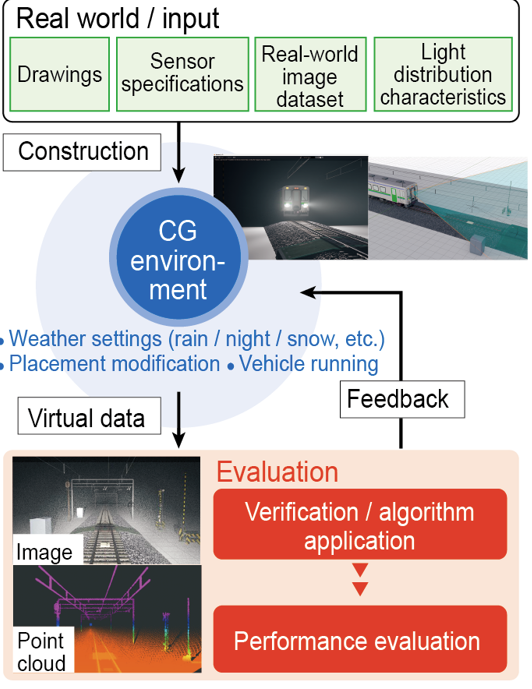
To address this issue, we developed a method that uses CG simulation to evaluate sensor layout and inspection algorithm performance in advance, without relying on field tests. In this method, cameras and sensors can be freely placed in a CG environment modeling railway line facilities and vehicles, enabling the virtual generation of data under various environmental conditions, including sensor-specific scanning methods, lighting, and weather. Unlike image generation AI, this method enables accurate reproduction of geometries based on drawings and direct control of environmental conditions, allowing a complete workflow, from data generation to inspection algorithm evaluation and modification of test conditions, to be repeatedly executed (Fig. 1).
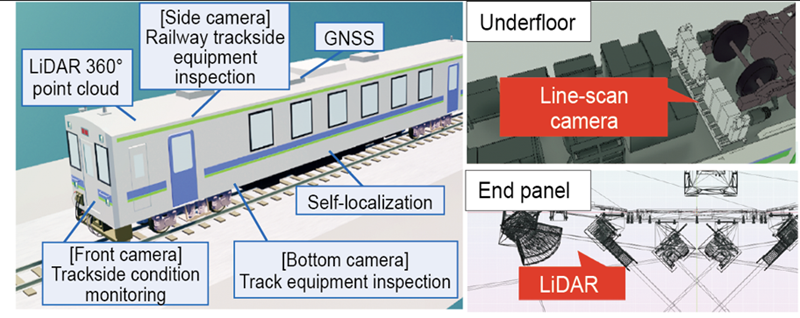
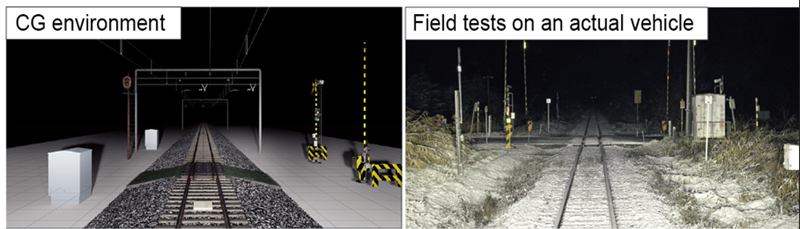
The method was applied to the development process of an inspection system for signaling and communications facilities. Its effectiveness in efficiently identifying optimal solutions was confirmed for camera and sensor selection, sensor layout on existing vehicles (Fig. 2), and the development of facility condition assessment methods. In addition, headlight layout simulations confirmed that the optimal conditions derived using this method also produced the best imaging results in field tests on an actual vehicle.
By utilizing the evaluation environment provided by this method, railway operators can rapidly determine system specifications and verify the performance of inspection algorithms, thereby shortening the development and implementation period.
Other Contents
- 7. Fretting Wear Mitigation Method for Axle Journal Bearings
- 8. Construction, Inspection, and Reinforcement Methods for Preventing Fracture of Aluminothermic Weldings
- 9. Rail Head Transverse Crack Detection using Guide Waves
- 10. Automation of Spalling Condition Assessment Using Hammering Sound Judgment AI and Hammer Auto-tracking
- 11. Embankment Quality Control Methods Using Construction Phase Settlement Data
- 12. Damage Estimation and Visualization Tool for Signaling Facilities Affected by Snow Dropping from High-Speed Vehicles
- 13. Marker-Assisted Platform Position Measurement Using Forward-View Train Images
- 14. Anomaly Screening Method for Overhead Contact Line Equipment Requiring High-Frequency Inspection
- 15. Method for Identifying Causes of Failures in Electric Point Machines
- 16. Performance Evaluation Method for Inspection Systems Using Cameras and Sensors Based on CG Simulation
- 17. Method for Constructing 3D Railway Track Spatial Data Using In-service Trains
- 18. Safety Confirmation-Based Train Control System
- 19. Comprehension Visualization System for Trainees in Remote Lectures for Driver Training
- 7. Fretting Wear Mitigation Method for Axle Journal Bearings
- 8. Construction, Inspection, and Reinforcement Methods for Preventing Fracture of Aluminothermic Weldings
- 9. Rail Head Transverse Crack Detection using Guide Waves
- 10. Automation of Spalling Condition Assessment Using Hammering Sound Judgment AI and Hammer Auto-tracking
- 11. Embankment Quality Control Methods Using Construction Phase Settlement Data
- 12. Damage Estimation and Visualization Tool for Signaling Facilities Affected by Snow Dropping from High-Speed Vehicles
- 13. Marker-Assisted Platform Position Measurement Using Forward-View Train Images
- 14. Anomaly Screening Method for Overhead Contact Line Equipment Requiring High-Frequency Inspection
- 15. Method for Identifying Causes of Failures in Electric Point Machines
- 16. Performance Evaluation Method for Inspection Systems Using Cameras and Sensors Based on CG Simulation
- 17. Method for Constructing 3D Railway Track Spatial Data Using In-service Trains
- 18. Safety Confirmation-Based Train Control System
- 19. Comprehension Visualization System for Trainees in Remote Lectures for Driver Training